
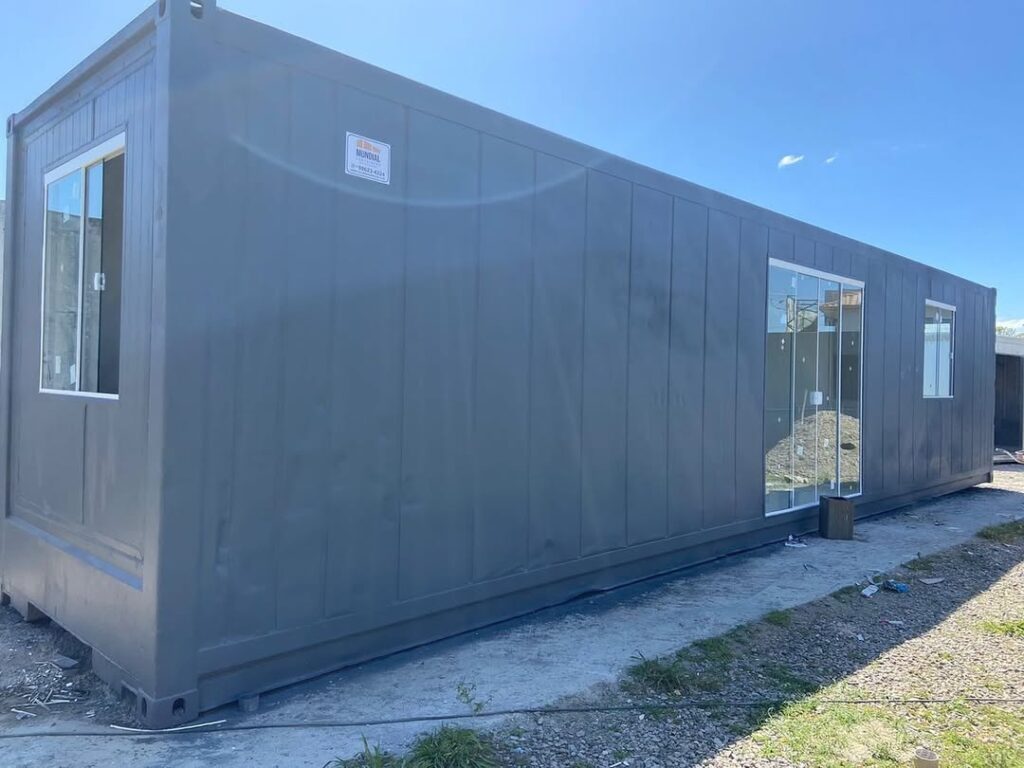
You have finally done it. You have decided to invest in a 40ft unit to scale your business or streamline your storage. However, before the truck arrives at your site, there is one critical question you must answer: “What is this 6,000-pound steel giant going to sit on?” Many first-time buyers mistakenly assume that a flat patch of grass is enough. Unfortunately, placing a heavy unit directly on raw earth leads to sinking, door misalignment, and premature rust. Consequently, “Preparing the Ground: The Best Foundations for 40ft Containers” is the most important step in your installation journey. At Steel Works Shipping Containers, we want your investment to last for decades. Therefore, we have put together this definitive guide to help you visualize the installation process, whether you are in the sandy soils of Florida or the rocky terrain of British Columbia.
Initially, a foundation serves two purposes: it keeps the container level and provides essential airflow beneath the wooden floor. If you skip this, moisture will become trapped, and your unit will eventually “sweat” from the ground up. In 2026, there are three primary contenders for the title of “best foundation.”
1. Concrete Piers: The Precision Choice for the Best Foundations for 40ft Containers
When you are looking for a permanent, professional setup, concrete piers are often the gold standard. This method involves pouring four to six concrete footings at the exact points where the container’s corner castings will rest.
Initially, you must excavate holes below the frost line—a critical step for our clients in Chicago, Illinois or Montreal, Quebec. Once the concrete sets, the container sits elevated off the ground. Furthermore, because the weight of a 40ft container is entirely supported by its four corners, piers provide the most stable “anchor” possible. Consequently, if you are setting up a permanent 40ft reefer in Newark, New Jersey or a container office in Atlanta, Georgia, concrete piers ensure your unit never shifts, even under maximum load. At Steel Works Shipping Containers, we highly recommend this for long-term industrial applications.
2. Gravel Pads: The Versatile All-Rounder
If you prefer a foundation that offers excellent drainage and a simpler installation process, a gravel pad is the answer. This involves excavating a shallow area—typically 42ft by 10ft—and filling it with crushed stone or “crushed run.”
Furthermore, gravel allows rainwater to drain away from the steel undercarriage. This is particularly vital in high-precipitation zones like Seattle, Washington or Vancouver, BC. Instead of water pooling around the bottom rails, it seeps through the gravel and into the subsoil. Moreover, a gravel pad is much easier to level than a series of individual piers. Therefore, for small businesses in Houston, Texas or Savannah, Georgia, a gravel pad provides a professional look and high-performance drainage without the permanence of poured concrete. When Steel Works Shipping Containers delivers to Miami, Florida or New Orleans, we often see gravel pads as the preferred choice for residential storage.
3. Railroad Ties: The Practical Budget Solution for 40ft Containers
For those who need a quick, cost-effective setup, railroad ties or pressure-treated 6×6 timbers are a reliable alternative. This method involves placing the timbers horizontally on a leveled, compacted surface.
Initially, you might choose this because it requires the least amount of site work. You simply lay the ties where the ends and mid-section of the 40ft container will sit. However, you must ensure the ground is well-compacted first. If the soil is soft—common in Orlando, Florida or Laredo, Texas—the timbers may settle unevenly over time. Nevertheless, for a temporary job site office in Dallas or a seasonal reefer in Kansas City, railroad ties offer a “low-impact” foundation that is easy to remove later. At Steel Works Shipping Containers, we suggest using “Grade A” ties to ensure they don’t rot prematurely in the humid air of Jacksonville or Tampa.
Visualizing the Installation: A Step-by-Step Walkthrough
Initially, the installation process begins long before the delivery truck enters your zip code. To help you prepare, let’s walk through a typical setup in a city like San Antonio, Texas or Sacramento, California.
- Step 1: Marking the Footprint. Use stakes and string to mark out a 40ft by 8ft area. Always add an extra foot on each side for clearance.
- Step 2: Leveling the Site. This is the most crucial part of “Preparing the Ground: The Best Foundations for 40ft Containers.” If the site is even one inch out of level, the doors of your container may bind or fail to close.
- Step 3: Setting the Foundation. Whether you are pouring piers in Milwaukee or laying gravel in San Diego, ensure your measurements are exact.
- Step 4: The Delivery. When the Steel Works Shipping Containers driver arrives, they will back the trailer onto your foundation. Using a tilt-bed system, the unit is slowly slid onto your prepared surface.
- Step 5: Final Check. Once the unit is on the ground, open and close the doors. If they swing freely, your foundation is a success!
Regional Foundations: Matching the Soil to the Solution
Because we deliver across the entire North American grid, we have seen how local geography dictates the best foundation choice.
The Best Foundations for 40ft Containers for The Southern and Coastal Hubs
In Texas (Houston, San Antonio, Corpus Christi) and Florida (Miami, Fort Lauderdale, Tallahassee), the soil can be sandy or prone to shift with heavy rain. Consequently, we often steer our clients toward gravel pads because they handle the moisture and provide a stable, “floating” base. Similarly, in Savannah, Georgia and Charleston, the salt air makes elevation on concrete piers a smart move to prevent the bottom rails from sitting in damp grass.
The Best Foundations for 40ft Containers for The West Coast and Southwest
In California (Los Angeles, Long Beach, Oakland, San Bernardino), the ground is often hard-packed but prone to seismic shifts. Therefore, a well-compacted gravel pad offers a touch of flexibility. In Phoenix, Arizona and Albuquerque, New Mexico, the dry, sun-baked earth is incredibly stable. Consequently, many of our clients in Fresno and Bakersfield find that simple railroad ties are more than sufficient for decades of use.
The Industrial North and Canada find the Best Foundations for 40ft Containers
Moving into the cold zones of Chicago, Newark, and Seattle, the “frost heave” is your biggest enemy. If you use shallow piers, the frozen ground will literally push your container out of level during the winter. Therefore, for our partners in Montreal, Quebec City, and Vancouver, we recommend concrete piers that extend at least 4 feet deep. This ensures your Steel Works reefer remains level even when the ground is frozen solid.
Why the Foundation Defines Your ROI
Initially, it might seem like an extra expense to prep your site. However, the ROI of a proper foundation is undeniable. The Best Foundations for 40ft Containers 40ft container is a rigid steel box; if it sits on uneven ground, the frame will twist. This puts immense pressure on the door hinges and the roof seams. Furthermore, if you are using a reefer, an unlevel unit can cause condensation to pool in the corners rather than draining through the T-bar floor.
At Steel Works Shipping Containers, we take pride in being the solution provider that looks at the big picture. We don’t just want to sell you a 40ft High Cube; we want to ensure it serves your business for 20+ years. Whether you are in Oklahoma City, Wichita, or Laval, Quebec, we provide the technical advice to make your installation seamless.
Common Mistakes to Avoid when setting the best foundations for 40ft containers
Instead of learning the hard way, keep these “don’ts” in mind when “Preparing the Ground: The Best Foundations for 40ft Containers”:
- Don’t Use Cinder Blocks: While they are cheap, cinder blocks are brittle. Under the 6,000lb weight of an empty container (and 50,000lbs of cargo), they can crack and crumble.
- Don’t Ignore Drainage: If your site is at the bottom of a hill in Nashville or Memphis, you need a gravel base to prevent your container from sitting in a pond.
- Don’t Forget Access: Ensure the truck has at least 100 feet of straight-line space to pull away once the unit is dropped on the foundation.
Conclusion: A Solid Base for a Solid Business
In conclusion, your container is only as reliable as the ground beneath it. By choosing between concrete piers, gravel pads, or railroad ties, you are customizing your setup for your specific climate and budget. “Preparing the Ground: The Best Foundations for 40ft Containers” is the final hurdle before your new asset begins working for you.
Steel Works Shipping Containers is ready to deliver your next unit to Portland, Arlington, or Surrey, BC. We bring the steel, but you provide the stage. Make sure it’s a good one!


